01
Infection Control
Cathelicidin-inspired mechanisms can support direct antimicrobial activity by disrupting microbial membranes and helping control pathogens.
About the Science
CSA BioTech's scientific approach is rooted in the biology of the innate immune system, antimicrobial peptides known as cathelicidins, and synthetic small-molecule mimics known as ceragenins.
Scientific Rationale
Innate Immune System
The innate immune system is the body's first response system. It helps identify threats, control microbial invasion, recruit immune cells, and support tissue repair.
Recognize threats
Control microbial invasion
Recruit immune cells
Support tissue repair
Cathelicidins
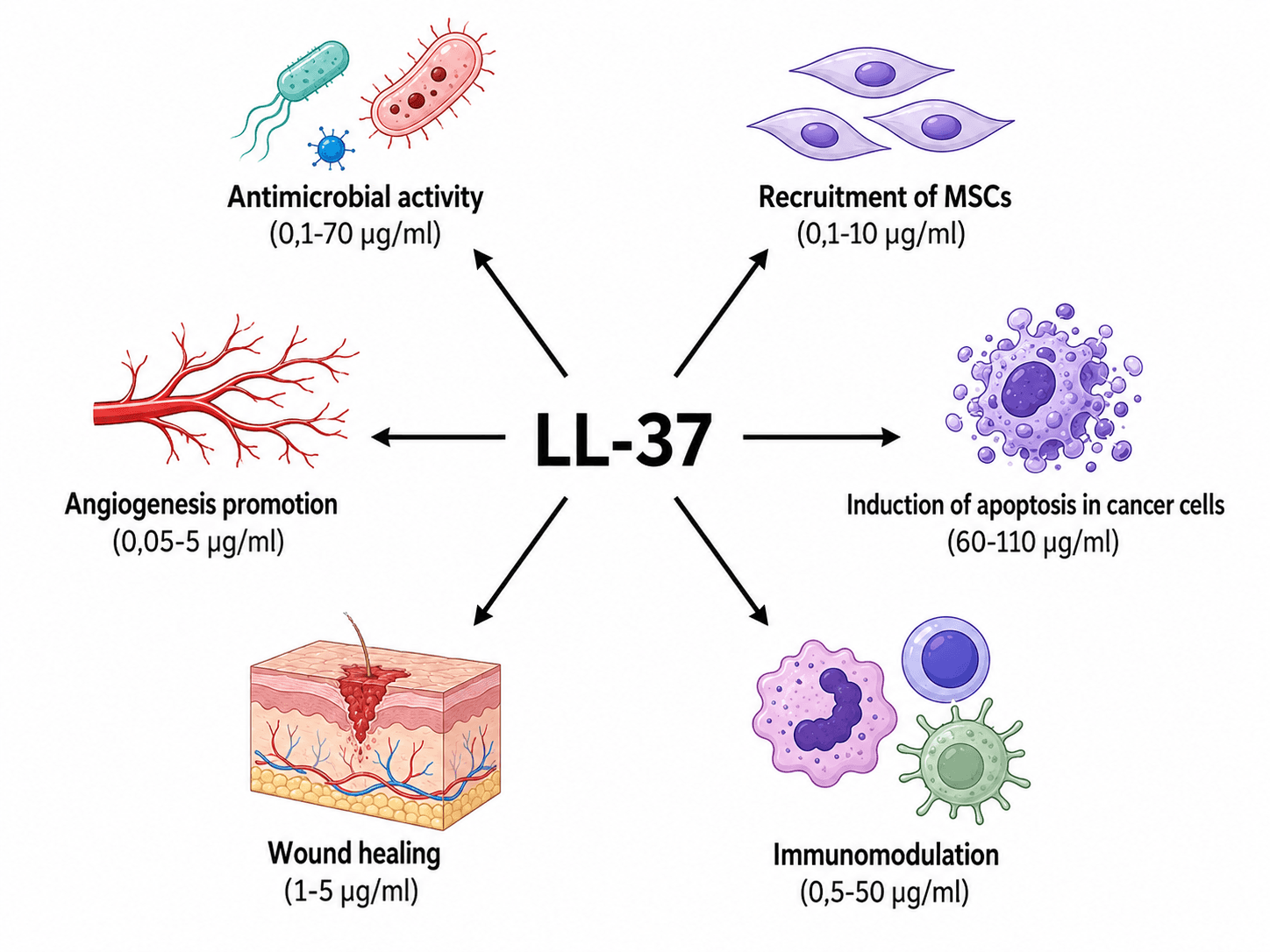
Cathelicidins are small, positively charged antimicrobial peptides. In humans, the CAMP gene encodes hCAP18, a precursor protein that is processed into LL-37, an active peptide fragment involved in antimicrobial activity, immune modulation, and wound-healing biology.
Microbial membrane disruption
Biofilm interference
Immune-cell recruitment
Endotoxin neutralization
Wound-healing biology
LL-37 Functional Biology
Wound-Healing Biology
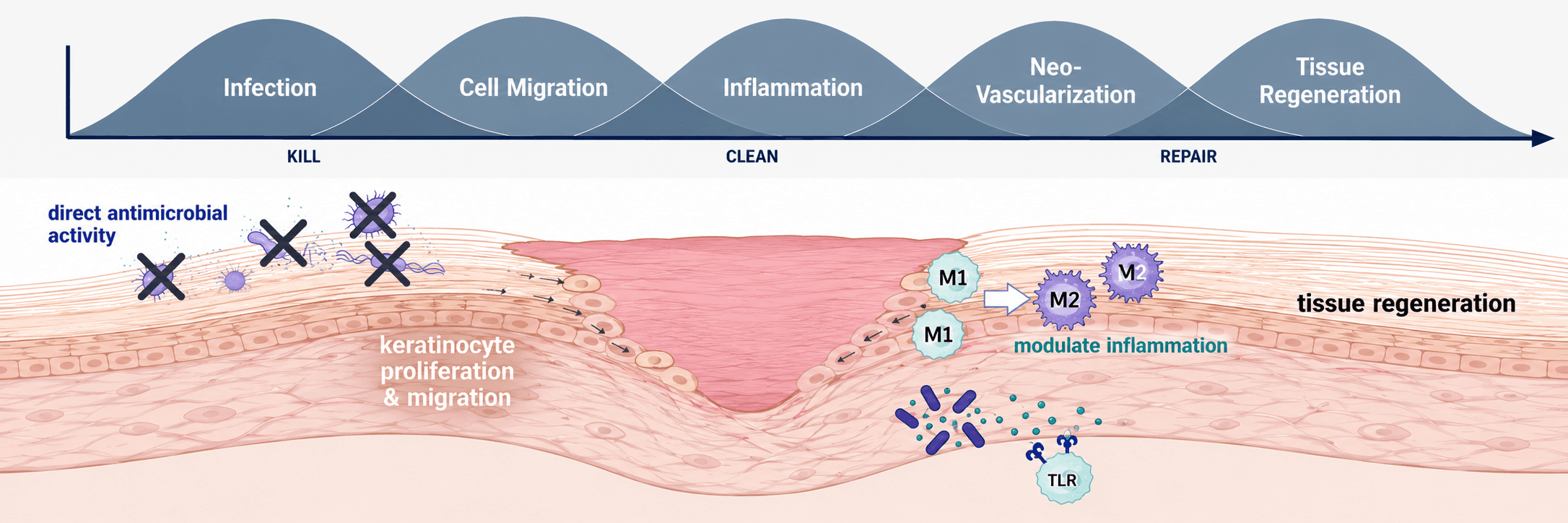
Cathelicidin-related biology provides a scientific rationale across antimicrobial activity, cell migration, inflammation modulation, neovascularization, and tissue repair.
Kill
Clean
Repair
Cathelicidin-inspired mechanisms can support direct antimicrobial activity by disrupting microbial membranes and helping control pathogens.
Cathelicidins are involved in immune signaling, including immune-cell recruitment, modulation of inflammation, and interaction with microbial cell-wall fragments.
As wounds progress, immune modulation and tissue-repair signals help support regeneration, remodeling, and wound closure biology.
Ceragenins
Ceragenins are synthetic small molecules designed to mimic key properties of antimicrobial peptides such as cathelicidins. Unlike peptide-based molecules, ceragenins are non-peptide structures, which may offer advantages in drug development, formulation, and stability.
Inventor of Ceragenins
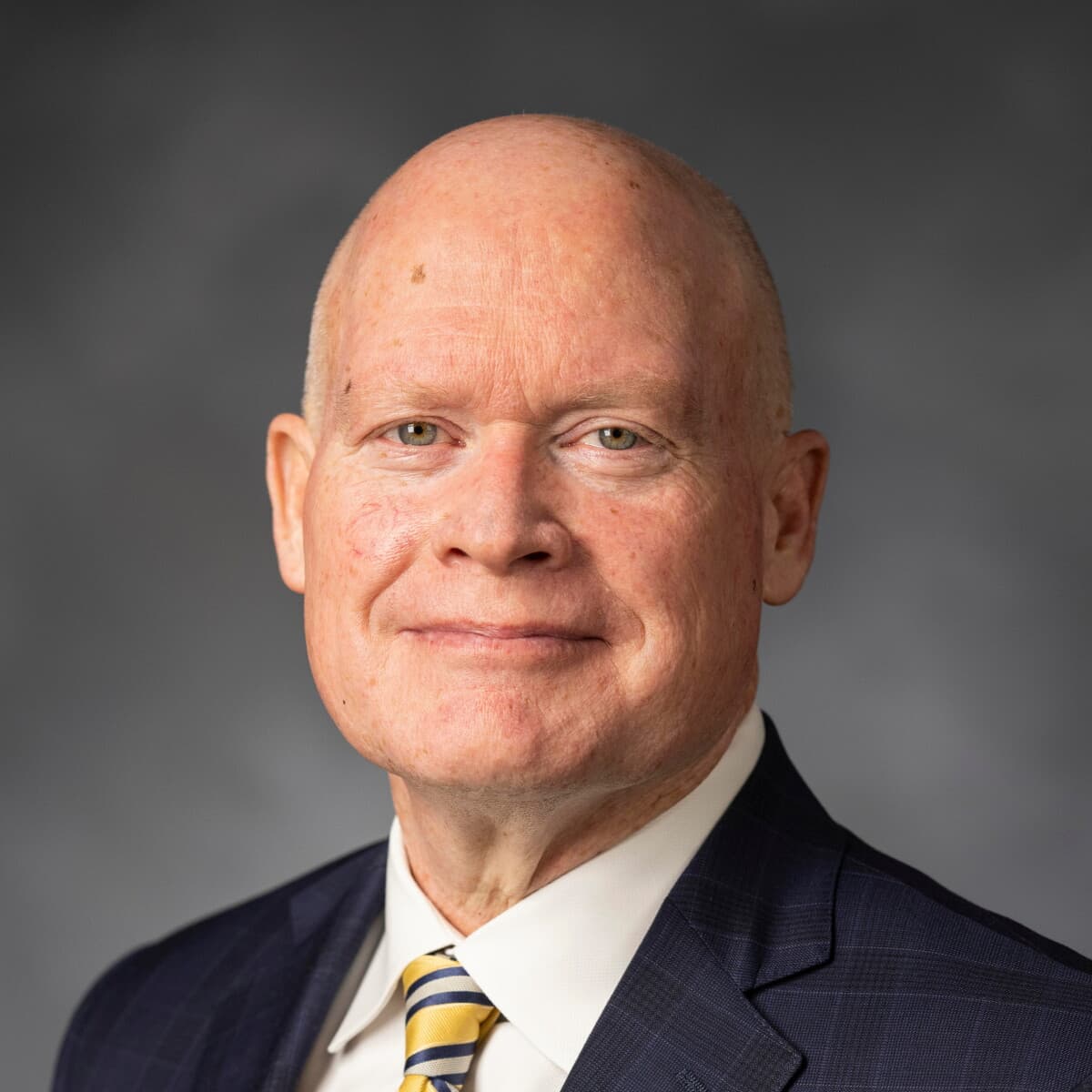
Paul B. Savage, PhD, is recognized for his work in ceragenin chemistry. He is the Reed M. Izatt Professor of Chemistry and Biochemistry at Brigham Young University.
Dr. Savage received his undergraduate degree in chemistry from BYU and his PhD in organic chemistry from the University of Wisconsin. He completed postdoctoral training at The Ohio State University.
His research is tied to innate immune function, including structural requirements of glycolipids for natural killer T-cell stimulation and the development of non-peptide mimics of antimicrobial peptides. His work has led to more than 160 papers and dozens of issued and pending patents, with research support from the National Institutes of Health, the National Science Foundation, and corporate sponsors.